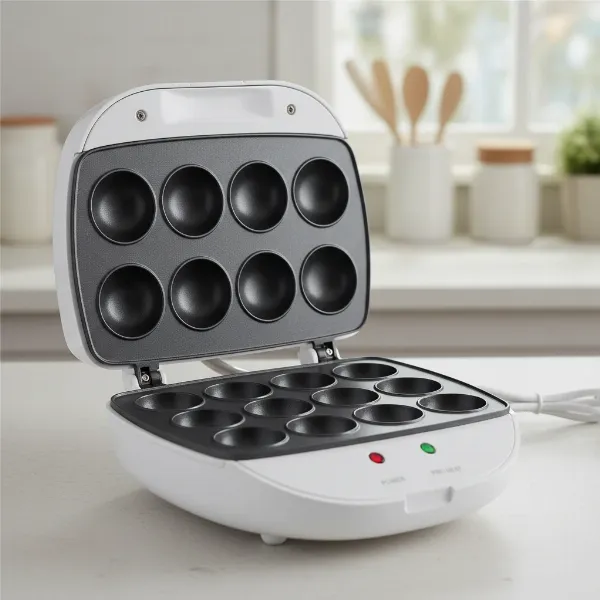
Hosting a grand party or running a bustling bakery means you’re often faced with the delightful challenge of baking large batches of cakes. Hand-mixing might work for a single birthday treat, but when you need to whip up dozens of cupcakes or a multi-tiered wedding cake, your hands simply won’t cut it. This is where a robust and reliable cake maker steps in, transforming tedious tasks into efficient, enjoyable processes. Choosing the right machine isn’t just about convenience; it’s about achieving consistent quality, saving time, and scaling your baking ambitions.
Whether you’re a seasoned professional looking to upgrade your commercial kitchen or an enthusiastic home baker catering to large gatherings, selecting the ideal cake maker requires careful consideration. From powerful stand mixers designed for prosumer use to industrial-grade planetary mixers and fully automated production lines, the options are vast. We’re here to help you navigate this world, ensuring you pick a cake maker that not only meets your volume requirements but also enhances your baking prowess, delivering perfectly mixed batters and flawless cakes every time.
Cake Maker: Overview and Benefits
A “cake maker,” in the context of baking equipment, refers to a range of machines designed to streamline the cake-making process, from mixing ingredients to forming and sometimes even decorating the finished product. These machines range from powerful stand mixers for home and light commercial use to heavy-duty industrial units for large-scale production.
The benefits of using a dedicated cake maker, especially for parties and large batches, are numerous when compared to traditional hand methods. Firstly, these machines offer unparalleled efficiency, significantly reducing the time and labor involved in preparing large quantities of batter. Imagine whisking egg whites for a dozen cakes by hand versus letting a powerful stand mixer do the job in minutes. Secondly, they ensure consistency in your bakes, as mechanical mixing guarantees uniform incorporation of ingredients, leading to a perfectly aerated batter and a consistent crumb structure in every cake. This consistency is crucial when you need every slice to be as delightful as the last for a big event. Moreover, powerful cake makers can handle stiff doughs and thick batters that would be exhausting or impossible to mix manually, expanding your creative possibilities in the kitchen.
Popular Types of Cake Makers
When it comes to handling large batches and catering to parties, cake makers generally fall into two main categories: versatile stand mixers for home and light commercial use, and robust commercial-grade mixers for industrial applications.
Household Cake Makers
For home bakers or small-scale caterers, a heavy-duty stand mixer is often the go-to “cake maker.” These appliances are designed for consistent performance, handling everything from delicate meringues to dense cake batters. Many models come with multiple attachments, including a flat beater for cakes and cookies, a wire whisk for aeration, and a dough hook for heavier bread doughs.
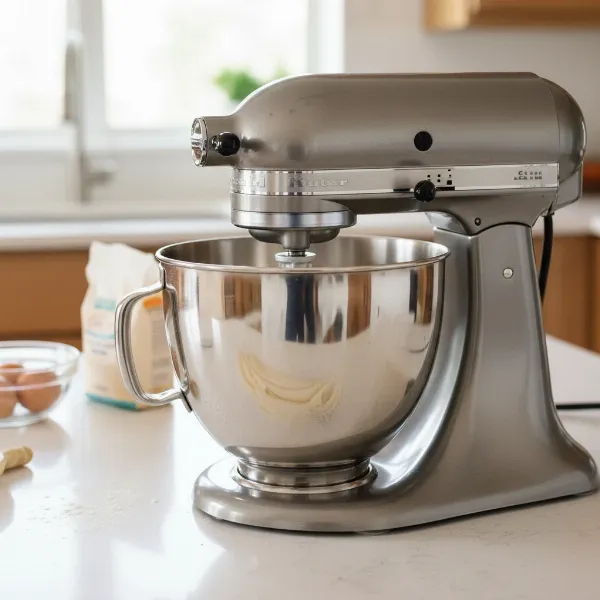 Stainless steel KitchenAid stand mixer with a large bowl mixing cake batter.
- KitchenAid Bowl-Lift Artisan: A popular choice for those needing higher capacity, this model often features a 5.6-liter bowl and multiple speed settings, making it powerful enough for large batches. It offers exceptional versatility and durability, handling various textures from light batters to thick enriched dough.
- Kenwood Titanium Chef Patissier XL: This advanced smart stand mixer comes with both 5L and 7L bowls, integrated scales, and even an EasyWarm bowl, making it highly versatile for different baking needs. Its 1400W motor ensures high-quality results across various tasks.
- Ankarsrum Assistent Original: Distinguished by its unique design where the bowl rotates instead of a planetary mixing mechanism, this 1500W mixer excels at kneading dough with delicacy. While it may require some assistance for cake mixes, its robust build is a significant investment for serious bakers.
|
Our Picks for the Best Cake maker in 2026
As an Amazon Associate I earn from qualifying purchases.
|
||
| Num | Product | Action |
|---|---|---|
| 1 | Kitchen in the box Stand Mixer,3.2Qt Small Electric Food Mixer,6 Speeds Portable Lightweight Kitchen Mixer for Daily Use with Egg Whisk,Dough Hook,Flat Beater (Purplish-red) |

|
| 2 | Holstein Housewares Non-Stick 6-Count Electric Cupcake Maker Machine – Bakes 6 Cupcakes, Muffins, Pizza Cups, Cinnamon Buns – Perfect for Gifts, Birthdays, Holidays, or Bake Sales, Lavender |
|
| 3 | Suuker Cake Cutter, Stainless Steel Cake Knife and Server with Double Handle, Adjustable Cake Slicer for Cake Server, Pie Server, Cake Cutting Set for Wedding |
|
| 4 | Stand Mixer, Kitchen in the box 3.2Qt Small Electric Food Mixer,6 Speeds Portable Lightweight Kitchen Mixer for Daily Use with Egg Whisk,Dough Hook,Flat Beater (Purple) |
|
| 5 | Kitchen in the box Stand Mixer,3.2Qt Small Electric Food Mixer,6 Speeds Portable Lightweight Kitchen Mixer for Daily Use with Egg Whisk,Dough Hook,Flat Beater (Blue) |
|
| 6 | Cake Maker Lava Cake Maker Mini Donut Maker Waffle Maker Pancakes Maker Machine for Breakfast, Snacks, Desserts Non-stick Surface, Cake Machine, Double-sided Heating, Azure |
|
| 7 | Mini Cake Maker, Portable Mini Bundt Cake Maker Double-Sided Heating, electric cupcake makers for Breakfast, Cake, Snacks (Red) |
|
| 8 | Kitchen in the box Stand Mixer,3.2Qt Small Electric Food Mixer,6 Speeds Portable Lightweight Kitchen Mixer for Daily Use with Egg Whisk,Dough Hook,Flat Beater (Black) |
|
| 9 | Kitchen in the box Stand Mixer,3.2Qt Mini Electric Food Mixer,6 Speeds Portable Lightweight Kitchen Mixer for Daily Use with Egg Whisk,Dough Hook,Flat Beater (Green) |
|
| 10 | Joydeem Electric Dough Maker with Ferment Function, Microcomputer Timing, Face-up Touch Panel, 7.4Qt, 304 Stainless Steel, JD-HMJ7L |
|
Professional Cake Makers
For bakeries, catering businesses, or facilities requiring continuous, high-volume production, commercial planetary mixers are indispensable. These machines are built to withstand rigorous daily use and handle significantly larger quantities than their household counterparts.
- Planetary Mixers: These are the most common commercial mixers, known for their versatility. They feature a stationary bowl and a rotating agitator that moves around the bowl’s perimeter (like planets orbiting the sun), ensuring thorough mixing of batters, creams, and doughs. Capacities can range from 7 quarts for countertop models to 80 quarts or more for floor models. Brands like Hobart, Globe, Univex, and BakeMax offer a variety of sizes and power levels suitable for diverse commercial needs. For instance, Hobart’s Legacy Planetary Floor Mixers can go up to 80 quarts, while Univex offers models up to 80 quarts with multiple speeds.
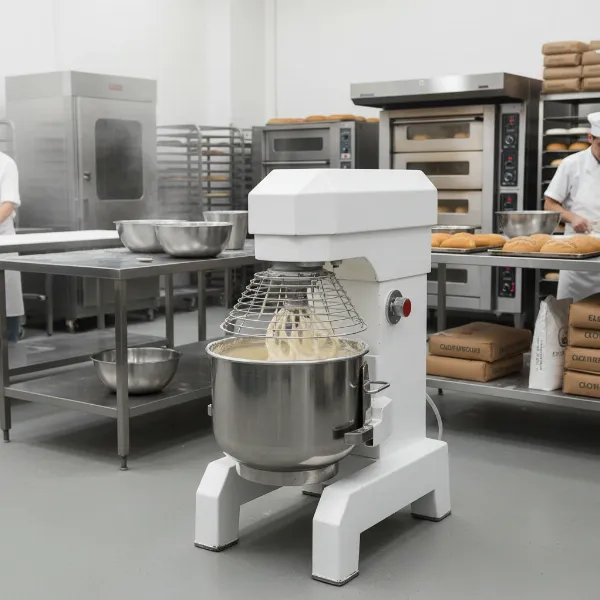 Large commercial planetary mixer with a metal bowl for bakery production.
- Spiral Mixers: Primarily designed for dough, these mixers use a spiral-shaped agitator and a rotating bowl to gently yet efficiently knead large quantities of heavy dough, making them ideal for bread and pizza but also suitable for some dense cake recipes.
Automatic Cake Production Lines
For industrial bakeries and large-scale manufacturing, fully automatic cake production lines offer complete automation from batter depositing to baking, cooling, filling, and decorating.
- Unifiller’s Cake-o-Matic HMI: This machine is ideal for icing and decorating cakes, featuring a built-in computer that adjusts to changing icing texture for consistent application. It can also serve as a batter depositor.
- WM Machinery’s Automatic Cake Machine: These machines utilize PLC control systems for precise dough extrusion and synchronous forming, capable of producing various fancy pastries, cookies, and cakes, with capacities up to 300kg/h. They can be integrated into production lines or used as standalone units and are designed for use with standard 600×400 baking trays.
- Dunbar Systems Inc.: Specializes in custom automated systems for commercial bakeries, offering solutions for mass production of cupcakes, snack cakes, and sheet & layer cakes, focusing on efficiency and quality.
- Shanghai Target Industry Co., Ltd.: Offers commercial fully automatic cake production lines that support over 500 units per hour, suitable for factory-level expansion.
Guide to Choosing the Right Cake Maker
Selecting the perfect cake maker for parties and large batches involves evaluating several critical factors to ensure it aligns with your specific needs and operational scale.
Power and Capacity
The size of your batches dictates the necessary capacity. For frequent large home baking or small catering, a stand mixer with a bowl capacity of 5.6 liters (around 6 quarts) or more is a good starting point. For commercial operations, planetary mixers range from countertop 7-quart models to immense 80-quart floor models. Consider not only the bowl size but also the motor’s horsepower or wattage. A higher wattage (e.g., 1200W-1800W for stand mixers, or commercial mixers with robust HP) is essential for effectively mixing dense batters and large quantities without straining the motor.
Material and Durability
A cake maker for high-volume use needs to be built to last. Look for models constructed from high-quality, food-grade materials like stainless steel (e.g., 304 grade) for the bowl and attachments, which ensures hygiene, durability, and resistance to corrosion. A sturdy, weighty construction for stand mixers is also vital to prevent movement during heavy-duty mixing.
Features and Conveniences
Modern cake makers offer a variety of features that can greatly enhance your baking process.
- Multiple Speed Settings: Essential for gradually incorporating ingredients and achieving different consistencies, from gentle stirring to rapid whipping.
- Attachments: Most stand mixers come with a flat beater, wire whisk, and dough hook. Commercial models offer specialized attachments for various tasks. The availability of additional, specialized attachments (like pasta makers or meat grinders for stand mixers) can also add to the machine’s versatility.
- Integrated Scales and Timers: Some high-end stand mixers feature built-in scales, like the Kenwood Titanium Chef Patissier XL and Bosch Series 6, simplifying ingredient measurement. Timers are useful for precise mixing durations.
- Bowl-Lift vs. Tilt-Head Design: Stand mixers typically come in these two designs. Bowl-lift models often offer greater stability and capacity, making them preferred for larger batches, whereas tilt-head models are generally more compact and easier to add ingredients.
- Ease of Cleaning: Removable, dishwasher-safe components greatly simplify post-baking cleanup.
- Automation: For commercial settings, features like PLC-controlled systems, servo motors, and touchscreen controls allow for automated and precise operation, reducing manual effort and ensuring consistent output.
Brand and Price
Reputable brands often guarantee better quality, performance, and customer support. For stand mixers, KitchenAid and Kenwood are widely recognized for their durability and range of features. In the commercial sphere, Hobart, Globe, and Univex are prominent names known for heavy-duty, reliable planetary mixers.
The price range for cake makers can vary significantly. Stand mixers for large batches typically cost between £200 and £800. Commercial planetary mixers can range from a few hundred dollars for smaller countertop models to tens of thousands for large floor models or fully automated production lines. Consider the total cost of ownership, including purchase price, energy consumption, and maintenance.
Comparing the Best Cake Makers for Large Batches
Choosing the “best” cake maker depends heavily on your specific volume needs, budget, and desired level of automation. Here’s a comparison of top contenders across different categories:
Stand Mixers for High-Volume Home/Prosumer Use
| Feature | KitchenAid 5.6L Bowl-Lift Artisan | Kenwood Titanium Chef Patissier XL | Ankarsrum Assistent Original |
|---|---|---|---|
| Capacity | 5.6 Liters | 5L and 7L (two bowls included) | Large capacity (bowl rotates) |
| Wattage | 375W | 1400W | 1500W |
| Design | Bowl-Lift | Planetary, Tilt-Head | Bowl rotates (unique design) |
| Key Features | 11 speeds, powerful for dense doughs | Integrated scales, EasyWarm bowl, touchscreen, presets | Excels at dough kneading |
| Pros | Large capacity, durable, versatile | Advanced features, high power, smart | Built to last, excellent for bread |
| Cons | Lower wattage than some rivals | High cost, complex features might be overkill for some | Less intuitive for cake batter, premium price |
| Price (approx.) | £674.95 | £599.99 | £675 |
- Overall Assessment: The KitchenAid 5.6L Bowl-Lift Artisan is a workhorse, ideal for those who prioritize capacity and durability for consistent large-batch baking. The Kenwood Titanium Chef Patissier XL offers advanced technology and smart features for a modern baking experience, while the Ankarsrum Assistent Original stands out for its unique design and exceptional dough-kneading capabilities, making it a favorite among bread bakers.
Commercial Planetary Mixers for Bakeries
| Feature | Hobart HL200 Legacy Stand Mixer | Globe SP60 Planetary Mixer | Univex SRM40+ Mixer |
|---|---|---|---|
| Capacity | 20 Quarts | 60 Quarts | 40 Quarts |
| Horsepower | Not specified (professional grade) | 2 HP (for SP40-1 model, 40 Qt) | Not specified |
| Installation | Stand/Floor | Floor | Floor |
| Key Features | Durable, renowned brand quality | Heavy-duty, planetary action | Professional, multiple speeds |
| Pros | Industry standard for reliability | High capacity, robust | Versatile for various tasks |
| Cons | Significant investment, large footprint | Requires substantial space | High cost |
| Price (approx.) | $10,217.20 (20 Qt) | $17,436.00 (60 Qt) | $10,236.00 (40 Qt) |
- Overall Assessment: For serious commercial use, Hobart mixers are widely considered the benchmark for durability and performance. Globe and Univex also offer excellent heavy-duty planetary mixers across various capacities, providing reliable solutions for busy bakeries. The choice among these often comes down to specific capacity requirements and budget.
Automated Cake Production Systems for Industrial Scale
| Product Name | Key Feature | Production Capacity (approx.) | Price Range (approx. per unit) |
|---|---|---|---|
| WM Machinery Automatic Cake Machine | PLC control, precise dough extrusion | 50-300 kg/h | $5,290 – $5,980 (models) |
| Unifiller Cake-o-Matic HMI | Self-adjusting cake decorating, batter depositing | High efficiency (automated) | (Contact for quote) |
| Shanghai Target Industry Production Line | Fully automated, scalable | 500+ units/hour | $8,000 – $10,000 |
- Overall Assessment: These industrial solutions are designed for maximum output and consistency. WM Machinery provides a range of automatic cake forming machines, ideal for businesses looking to automate the initial cake production stages. Unifiller’s Cake-o-Matic specializes in efficient icing and decorating, while Shanghai Target Industry offers complete production lines for factory-level operations. The investment in these systems is significant but yields substantial returns in labor savings and increased output.
How to Choose a Commercial Mixer
“When investing in a commercial mixer, always prioritize machines that meet food safety standards like ISO 22000 and HACCP. Durable stainless steel construction isn’t just about longevity; it’s a non-negotiable for hygiene.” – Admin, cakemakerpro.com
How to Use and Maintain Your Cake Maker
Proper usage and maintenance are crucial to extending the lifespan and ensuring the optimal performance of your cake maker, whether it’s a home stand mixer or a commercial behemoth.
Correct Usage
- Read the Manual: Always start by thoroughly reading the manufacturer’s instruction manual. This will provide specific guidance on assembly, operation, and safety precautions for your particular model.
- Proper Ingredient Loading: Add ingredients gradually, especially when dealing with flour or dry mixes, to prevent clouds of dust and ensure even incorporation. For stand mixers, avoid overfilling the bowl, as this can strain the motor and lead to improper mixing.
- Use the Right Attachment: Each attachment (beater, whisk, dough hook) is designed for a specific task. Using the correct one prevents damage to the machine and ensures the best results for your batter or dough.
- Start Slow: Begin mixing at a low speed to incorporate ingredients, then gradually increase to the desired speed. This prevents splattering and ensures thorough mixing.
- Don’t Force It: If the machine struggles with a heavy mixture, don’t force it. Reduce the batch size or consider if you need a more powerful machine.
Maintenance Tips for Longevity
- Immediate Cleaning: Clean the bowl and attachments immediately after each use. Most bowls and standard attachments are dishwasher-safe, but always check the manual. For commercial machines, regular daily cleaning is essential to prevent buildup and ensure hygiene.
- Wipe Down the Unit: Use a damp cloth to wipe down the motor head and exterior of the machine, ensuring no moisture enters the electrical components.
- Lubricate Moving Parts: Some commercial mixers require periodic lubrication of moving parts as per the manufacturer’s guidelines.
- Inspect Regularly: Routinely check for any signs of wear and tear, such as frayed cords, loose screws, or damaged attachments. Promptly replace or repair any compromised parts.
- Professional Servicing: For commercial-grade machines, schedule regular preventive maintenance by a qualified technician. Some suppliers offer 24/7 technical support and warranty coverage of at least 12 months with extended options. This can prevent major breakdowns and ensure continuous operation.
- Proper Storage: Store your cake maker in a clean, dry place. For stand mixers, keeping attachments in the bowl with a tea towel can prevent scratching and keep them together.
Where to Buy Cake Makers?
Finding the right cake maker, whether for home parties or professional bakery use, requires knowing where to look for quality and reliable service.
Major Appliance Retailers and Online Stores (For Home/Prosumer)
For high-capacity stand mixers suitable for large home batches or light commercial use, major appliance retailers and their online counterparts are excellent resources.
- Physical Stores: Stores like Williams Sonoma, Sur La Table, John Lewis, or specialized kitchen supply stores allow you to see the machines firsthand, compare sizes, and often get expert advice.
- Online Marketplaces: Websites like Amazon, KitchenAid’s official store, Kenwood’s official site, and other major retailers offer a vast selection, often with competitive pricing and customer reviews.
- Specialized Baking Suppliers: Websites dedicated to baking equipment may offer a broader range of prosumer models and accessories.
Commercial Restaurant and Bakery Supply Stores (For Professional Use)
For professional-grade planetary mixers and industrial cake-making equipment, you’ll need to turn to specialized commercial suppliers.
- WebstaurantStore, Central Restaurant Products: These online giants offer an extensive catalog of commercial mixers from brands like Hobart, Globe, Univex, and more, complete with detailed specifications, pricing, and customer reviews. They often provide options for various capacities and usage levels (standard, medium, heavy-duty).
- Direct from Manufacturers: For automated production lines or highly specialized equipment, contacting manufacturers like Unifiller Systems, WM Machinery, or Dunbar Systems directly is often necessary. They can provide custom quotes, technical support, and installation services.
- Local Commercial Equipment Dealers: These dealers can offer personalized service, assistance with installation, and ongoing maintenance support, which is invaluable for commercial operations.
Considerations When Buying Online
- Shipping Costs and Logistics: Commercial machines are often heavy and require special shipping. Confirm shipping costs and delivery logistics before purchasing.
- Warranty and Returns: Understand the warranty policy and return procedures, especially for larger investments.
- Customer Support: Ensure the supplier offers robust customer support for troubleshooting and spare parts.
- Certifications: Verify that commercial equipment meets relevant safety and hygiene certifications (e.g., CE, UL, NSF).
Cake Maker Price List (Latest Update)
The price of a cake maker varies significantly based on its type, capacity, brand, and features. Here’s a general overview of current price segments:
Entry-Level / Mid-Range Stand Mixers (Household to Light Commercial)
This segment includes stand mixers suitable for frequent home use and smaller catering needs, offering good power and decent capacity.
- Price Range: Approximately $200 – $500
- Examples: Cuisinart Precision Stand Mixer (around £99), Kenwood kMix (around £208), KitchenAid Artisan 125 (around £449).
- Features: Typically 500W-1000W motors, 4-5 liter bowls, and basic attachments. Some may offer more advanced features like splash shields.
Mid-Range / High-End Stand Mixers (Prosumer)
These mixers are more powerful and offer larger capacities or advanced features, ideal for passionate home bakers or small businesses handling larger batches.
- Price Range: Approximately $500 – $900
- Examples: KitchenAid 5.6L Bowl-Lift Artisan (around £674.95), Kenwood Titanium Chef Baker XL (around £388-£449), Sage the Bakery Boss (around £419.95), Bosch Series 6 (around £479.99).
- Features: 1000W-1800W motors, 5.5-7 liter bowls, multiple speed settings, and sometimes integrated scales or bowl-lift designs.
Commercial Countertop Planetary Mixers
Designed for smaller commercial kitchens or specific tasks requiring moderate batch sizes.
- Price Range: Approximately $700 – $5,500
- Examples: Primo PM-7 (7 quarts, around $741.94), Axis AX-M7 (7 quarts, around $1,513.69), Univex SRM20 (20 quarts, around $5,494.80).
- Features: Heavy-duty construction, planetary mixing action, suitable for continuous operation in a professional setting.
High-End / Industrial Floor Planetary Mixers
For large-scale bakeries, catering companies, and food production facilities requiring significant capacity and power.
- Price Range: Approximately $8,000 – $45,000+
- Examples: Univex SRM80+ (80 quarts, around $21,406.80), Hobart HL800 Legacy Floor Mixer (80 quarts, around $42,436.80), Globe SP80PL (80 quarts, around $25,892.00).
- Features: High-horsepower motors, massive bowl capacities (up to 80 quarts or more), robust construction for continuous heavy-duty use, advanced safety features, and often integrated with production lines.
Automated Cake Production Machines
For fully automated, industrial-scale cake manufacturing.
- Price Range: Approximately $2,700 – $20,000+
- Examples: WM Machinery Automatic Cake Machine (from $5,290), Shanghai Target Industry Commercial Fully Automatic Cake Production Line ($8,000-$10,000).
- Features: PLC control, servo motors, automated depositing, forming, filling, and decorating capabilities, designed for high-volume, consistent output.
Note: Prices are approximate and can vary based on supplier, model year, features, and promotions.
Tips and Tricks for Delicious Cakes with Your Cake Maker
Having a great cake maker is just one piece of the puzzle; mastering its use and understanding some baking principles can elevate your cakes from good to truly unforgettable.
Essential Cake Recipes and Techniques
- Basic Sponge Cake: Start with a reliable sponge cake recipe. A good cake maker, especially a stand mixer, excels at aerating eggs and sugar for a light, fluffy base. Ensure ingredients are at room temperature for optimal emulsification.
- Buttercream Frosting: Your cake maker’s whisk attachment will create perfectly smooth and airy buttercream. Gradually add sifted powdered sugar and beat until light and fluffy.
- Meringue Mastery: For delicate meringues or light chiffon cakes, the whisk attachment is invaluable for achieving stiff peaks quickly and consistently.
Tips for Preventing Dry Cakes
- Don’t Overmix: Overmixing develops gluten, leading to a tough, dry cake. Mix until just combined, especially after adding flour.
- Accurate Measuring: Baking is a science. Use a kitchen scale for precise measurements of flour and sugar, as volume measurements can be inconsistent.
- Don’t Overbake: Overbaking is the primary culprit of dry cakes. Use a toothpick test – if it comes out with a few moist crumbs, the cake is ready.
- Add Moisture: Ingredients like buttermilk, yogurt, sour cream, or oil can significantly increase a cake’s moisture content. A simple syrup brushed onto warm cake layers also adds moisture and flavor.
Cake Decoration Ideas
Your cake maker can also assist with decorating by preparing various icings and fillings.
- Classic Buttercream Swirls: Use a piping bag fitted with a star or round tip to create elegant swirls on cupcakes or the top of a layer cake.
- Naked Cakes: These minimalistic cakes are frosted thinly, allowing the cake layers to show through. Your mixer helps create smooth, even frosting layers.
- Ganache Drip: A rich chocolate ganache can be poured over the top of a cooled cake, creating an appealing drip effect down the sides. Your mixer can easily prepare the ganache components.
- Fresh Fruit and Flowers: Garnish your cakes with seasonal fresh fruits and edible flowers for a natural, vibrant touch.
User Reviews and Feedback
Hearing from fellow bakers who rely on their cake makers for large batches provides invaluable insights into real-world performance. Users consistently praise high-capacity stand mixers and commercial planetary mixers for their robustness, efficiency, and ability to handle demanding tasks.
Highly Praised Aspects
- Power and Durability: Many users, especially those using KitchenAid bowl-lift models or commercial Hobart mixers, commend the machines’ ability to power through thick doughs and batters without overheating or bogging down. The “built to last” quality is a recurring theme, with some commercial mixers reportedly operating efficiently for up to 20 years.
- Consistency: Professional bakers highlight how commercial mixers ensure consistent batter texture and volume across large batches, which is critical for product uniformity in bakeries and catering businesses.
- Time-Saving: The automation offered by both high-end stand mixers and commercial machines significantly cuts down preparation time, allowing bakers to increase production and focus on other aspects of their craft. “Hand-beating, whisking and kneading can be laborious tasks, but the best stand mixers do the hard work for you, and are considerably faster.”
- Versatility: Users appreciate the wide range of tasks these machines can handle, from whipping cream and beating cake batter to kneading heavy bread dough and even making pasta with additional attachments.
Common Challenges and Feedback
- Cost: The initial investment for high-end stand mixers and especially commercial machines can be substantial, a common point of consideration for small businesses and home bakers alike.
- Noise: Some powerful stand mixers and commercial machines can be quite noisy, particularly at higher speeds or when working with heavy loads. The ProCook stand mixer, for example, was noted for being “pretty noisy.”
- Size and Footprint: Larger stand mixers and all commercial floor models require significant counter or floor space, which can be a challenge in smaller kitchens. “Stand mixers are expensive and take up a lot of countertop real estate.”
- Learning Curve for Advanced Features: While beneficial, advanced features like touchscreens and integrated scales on some smart stand mixers (e.g., Kenwood Titanium Chef Patissier XL, Bosch Series 6) can have a slight learning curve.
Overall, the consensus is clear: for anyone regularly baking for parties or large batches, a dedicated cake maker is an invaluable asset that justifies the investment through enhanced efficiency, consistent results, and expanded creative possibilities.
Conclusion
Navigating the world of cake makers for parties and large batches reveals a spectrum of powerful machines, each designed to meet specific baking demands. From the versatile, high-capacity stand mixers that empower home bakers and small caterers, like the robust KitchenAid Bowl-Lift Artisan or the feature-rich Kenwood Titanium Chef Patissier XL, to the industrial-grade planetary mixers and automated production lines essential for bustling commercial bakeries, the right equipment is a game-changer. These machines are not merely tools; they are investments in efficiency, consistency, and the sheer joy of producing delicious cakes on a grand scale.
By carefully considering factors such as power, capacity, durability, and essential features, you can make an informed decision that will elevate your baking endeavors. Remember that proper usage and diligent maintenance are key to unlocking the full potential and ensuring the longevity of your chosen cake maker. So, whether you’re crafting a single masterpiece for a celebration or churning out hundreds for daily demand, the perfect cake maker is out there, ready to become the heart of your baking operations. What magnificent cakes will you create next with the power of an exceptional cake maker at your fingertips?
Frequently Asked Questions
What capacity stand mixer is best for baking for large parties?
For large parties, a stand mixer with a bowl capacity of at least 5.6 liters (approximately 6 quarts) is generally recommended. This size allows you to prepare substantial batches of batter or dough, saving time and effort compared to smaller models. Commercial countertop mixers start from about 7 quarts, offering even greater capacity for extensive needs.
Are commercial cake mixers significantly different from home stand mixers?
Yes, commercial cake mixers are built for continuous heavy-duty use in professional environments. They feature much larger capacities (ranging from 7 to 80+ quarts), more powerful motors (measured in horsepower), and robust construction with commercial-grade materials like stainless steel. Home stand mixers, while powerful, are designed for intermittent use and smaller volumes.
What are the key features of an automatic cake machine for industrial baking?
Industrial automatic cake machines often include PLC-controlled systems for precision, servo motors for synchronized operations, and capabilities for automated batter depositing, forming, filling, and decorating. They are designed for high-volume output, consistent product quality, and integration into full production lines, drastically reducing manual labor.
How often should a commercial cake mixer be serviced?
Commercial cake mixers, due to their heavy usage, require regular preventive maintenance. Daily cleaning is essential, and weekly inspections for wear and tear are recommended. Comprehensive servicing by a qualified technician is typically advised every 150-200 operating hours to ensure optimal performance and extend the machine’s lifespan.
Can I use a regular stand mixer to make a lot of cake batter for a big event?
While a regular stand mixer can handle larger batches than hand mixing, using it for “a lot” of cake batter for a very big event might strain its motor and lead to overheating, especially if the batter is thick or requires prolonged mixing. For truly large quantities, a high-capacity prosumer stand mixer or a commercial countertop mixer would be more appropriate.