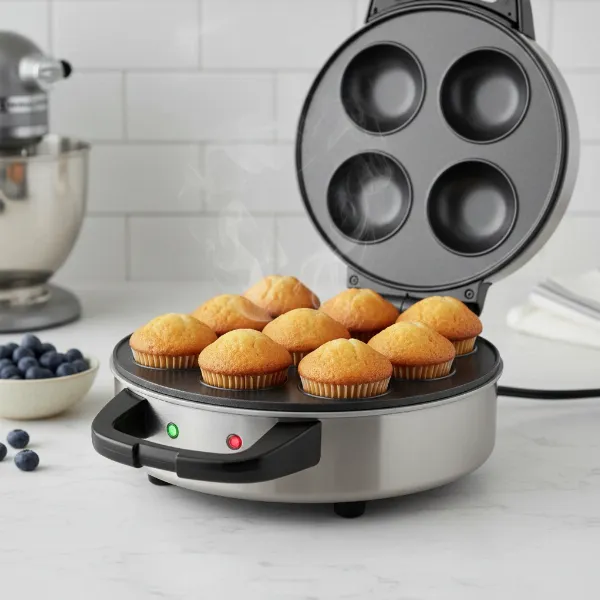
In the dynamic world of baking, speed often dictates convenience, especially for home bakers and small businesses. From intricate designs to rapid dessert solutions, two popular tools stand out: flexible silicone molds and compact electric cake machines. Both offer unique benefits, but when it comes to sheer speed, understanding their underlying mechanisms is crucial for making an informed choice. This article delves into the core differences, comparing their baking times and ideal applications to determine which method truly delivers faster results.
Understanding Baking Speed: The Core Factors
At the heart of any baking process is heat transfer, and the material and method of heating significantly impact how quickly your treats bake. Whether you’re using passive molds in a conventional oven or active electric appliances, the efficiency with which heat reaches the batter determines the overall speed. Materials like metal are excellent heat conductors, while silicone acts more as an insulator. Electric machines, by design, often employ direct, targeted heating to accelerate the cooking process, fundamentally differing from the indirect heating of an oven where molds are placed.
Electric Cake Machines: The Speed Champions
Electric cake machines, encompassing mini cupcake makers, bundt cake makers, and donut makers, are engineered for rapid baking of individual or small-batch items. These specialized appliances are designed to deliver quick, convenient results, making them the undisputed speed champions for certain baking tasks.
Many electric cake machines boast incredibly fast cooking times, often churning out perfectly baked individual servings in under seven minutes, with some even completing tasks in just three to five minutes. A significant advantage is their ability to heat up quickly, often requiring minimal to no preheating, or preheating in as little as one to three minutes. This efficiency stems from their dual-sided heating elements, which directly cook the batter from both the top and bottom simultaneously. This focused heat distribution ensures even baking of small items in a fraction of the time a conventional oven would take. They are ideal for preparing quick snacks, breakfast treats, or single-serving desserts, providing a convenient solution for instant gratification.
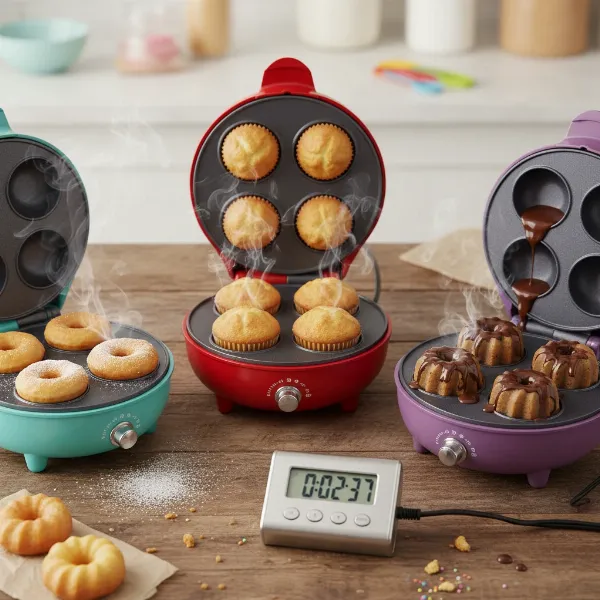 various electric mini cake machines baking small treats quickly and efficiently
How Electric Machines Achieve Rapid Baking
Electric cake machines are optimized for speed through several key design features:
- Direct Heating Elements: Unlike conventional ovens, these machines have heating elements directly integrated into the cooking plates, applying heat directly to the batter.
- Compact Design, Focused Heat: Their small, enclosed cooking chambers concentrate heat, preventing loss and accelerating the baking process.
- No-Preheat or Fast-Preheat Capabilities: Many models are ready to use almost instantly, eliminating the lengthy waiting period associated with preheating a full-sized oven.
|
Our Picks for the Best Cake maker in 2026
As an Amazon Associate I earn from qualifying purchases.
|
||
| Num | Product | Action |
|---|---|---|
| 1 | Holstein Housewares Non-Stick 6-Count Electric Cupcake Maker Machine – Bakes 6 Cupcakes, Muffins, Pizza Cups, Cinnamon Buns – Perfect for Gifts, Birthdays, Holidays, or Bake Sales, Lavender |

|
| 2 | Mini Cake Maker, Portable Mini Bundt Cake Maker Double-Sided Heating, electric cupcake makers for Breakfast, Cake, Snacks (Red) |
|
| 3 | Cake Maker Lava Cake Maker Mini Donut Maker Waffle Maker Pancakes Maker Machine for Breakfast, Snacks, Desserts Non-stick Surface, Cake Machine, Double-sided Heating, Azure |
|
| 4 | Joydeem Electric Dough Maker with Ferment Function, Microcomputer Timing, Face-up Touch Panel, 7.4Qt, 304 Stainless Steel, JD-HMJ7L |
|
| 5 | Kitchen in the box Stand Mixer,3.2Qt Small Electric Food Mixer,6 Speeds Portable Lightweight Kitchen Mixer for Daily Use with Egg Whisk,Dough Hook,Flat Beater (Purplish-red) |
|
| 6 | Kitchen in the box Stand Mixer,3.2Qt Small Electric Food Mixer,6 Speeds Portable Lightweight Kitchen Mixer for Daily Use with Egg Whisk,Dough Hook,Flat Beater (Blue) |
|
| 7 | Kitchen in the box Stand Mixer,3.2Qt Mini Electric Food Mixer,6 Speeds Portable Lightweight Kitchen Mixer for Daily Use with Egg Whisk,Dough Hook,Flat Beater (Green) |
|
| 8 | Stand Mixer, Kitchen in the box 3.2Qt Small Electric Food Mixer,6 Speeds Portable Lightweight Kitchen Mixer for Daily Use with Egg Whisk,Dough Hook,Flat Beater (Purple) |
|
| 9 | Kitchen in the box Stand Mixer,3.2Qt Small Electric Food Mixer,6 Speeds Portable Lightweight Kitchen Mixer for Daily Use with Egg Whisk,Dough Hook,Flat Beater (Black) |
|
| 10 | Suuker Cake Cutter, Stainless Steel Cake Knife and Server with Double Handle, Adjustable Cake Slicer for Cake Server, Pie Server, Cake Cutting Set for Wedding |
|
Popular Types of Fast Electric Machines
Several types of electric machines excel in rapid baking:
- Mini Cupcake Makers: Perfect for bite-sized treats, baking multiple mini cupcakes in minutes.
- Donut Makers: Quickly produce baked donuts, offering a healthier and faster alternative to frying.
- Mini Bundt Cake Makers: Create small, decorative bundt cakes without the wait of a traditional oven.
Silicone Molds in Conventional Baking: A Different Pace
Silicone molds have revolutionized baking with their non-stick properties and flexibility, but they operate within the confines of a conventional oven, which dictates a different pace. Unlike active electric machines, silicone molds are passive bakeware.
Silicone is an insulating material, meaning it does not conduct heat as efficiently as metal pans. This insulating property often leads to longer baking times. When using silicone molds, you might need to increase the baking duration by an additional five to ten minutes compared to traditional metal bakeware. This slower heat transfer can also result in less browning on the exterior of your baked goods. However, this slower, gentler bake can be beneficial for delicate items like cheesecakes or muffins, which benefit from more even and gradual cooking. Beyond speed, silicone molds are prized for their non-stick surface, making demolding effortless, and their ability to produce intricate shapes that would be challenging with rigid pans.
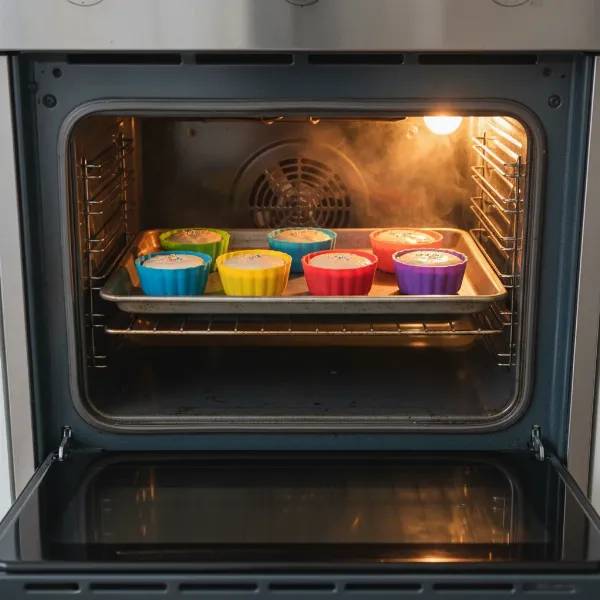 colorful silicone molds with batter placed on a metal sheet inside a preheated oven
Why Silicone Molds Take Longer
The extended baking time for silicone molds is primarily due to:
- Poor Heat Conduction: Silicone does not transfer heat as quickly from the oven’s ambient temperature to the batter as metal does.
- Requires Longer Exposure: The batter needs more time exposed to the oven’s heat to cook through evenly due to the mold’s insulating properties.
Best Uses for Silicone Molds (Beyond Speed)
While not the fastest, silicone molds shine in other aspects:
- Delicate Bakes: Ideal for items that require a gentle, even heat to prevent overcooking or drying out.
- Decorative Shapes: Their flexibility allows for complex designs and easy release of intricate finished products.
- Ease of Demolding: The non-stick and flexible nature ensures baked goods pop out cleanly, preserving their shape.
Direct Speed Comparison: Electric Machines Reign Supreme for Quick Bakes
When directly comparing the speed of baking, electric cake machines unequivocally reign supreme for producing small, individual items. For instance, an electric cupcake maker can deliver a batch of cupcakes in 3-10 minutes, often without preheating. In contrast, baking cupcakes in silicone molds in a conventional oven typically takes 15-20 minutes, plus an additional 10-15 minutes for oven preheating, and usually an extra 5-10 minutes due to silicone’s insulating properties.
“For quick, single-serve desserts, electric mini cake makers are unparalleled in speed. They bring instant satisfaction to your kitchen.”
This significant time difference highlights that while silicone molds are excellent for versatility and ease of release in traditional oven baking, they are not designed for rapid cooking. Electric machines, by focusing on direct, efficient heat for smaller volumes, offer a distinct advantage in speed for their specific applications.
Choosing Your Baking Method: Speed vs. Versatility
The choice between silicone molds and electric machines ultimately depends on your baking goals. If your priority is speed for individual, snack-sized treats, an electric cake machine is the clear winner. It’s perfect for a quick breakfast, an impromptu dessert, or when you need small quantities fast. However, if you’re baking larger cakes, loaves, or a big batch of muffins with aesthetic considerations like intricate shapes and easy release being key, then silicone molds used in a conventional oven offer superior versatility and convenience, albeit at a slower pace. Consider the batch size, the desired final product, and your overall time constraints when deciding.
Tips for Maximizing Baking Efficiency
To make the most of either baking method:
- For Electric Machines:
- Ensure your batter is the correct consistency for the machine to cook evenly and quickly.
- Clean the non-stick plates immediately after use to maintain efficiency and prevent residue buildup.
- For Silicone Molds:
- Always place silicone molds on a sturdy metal baking sheet before filling and transferring to the oven to provide stability and aid in heat transfer.
- You might need to slightly increase your oven temperature or baking time to compensate for silicone’s insulating properties.
- While often non-stick, a light greasing can further ensure perfect release, especially for intricate designs.
The Future of Fast Baking: Innovations and Trends
The baking landscape is continually evolving, with innovations pushing the boundaries of both speed and convenience. We’re seeing smarter electric machines with precise temperature controls and even faster preheating times. Meanwhile, silicone technology continues to advance, offering more durable and heat-responsive materials. The trend points towards solutions that cater to increasingly busy lifestyles, allowing bakers to enjoy homemade treats with minimal effort and wait time.
User Experiences: What Bakers Say
Bakers often express a clear preference based on their needs. Users laud electric cake makers for their “set it and forget it” simplicity and astonishing speed when craving a quick treat. “It delivers moist, evenly baked single servings in under seven minutes,” one user noted about a mini electric bundt cake maker. On the other hand, while acknowledging that silicone molds might take “a tad longer” to bake, bakers appreciate their non-stick properties and the ease with which intricate shapes are released, making them a go-to for decorative or delicate bakes. The common consensus is that electric machines are ideal for speed-focused, small-batch baking, while silicone molds are valued for their flexibility and convenience in traditional oven preparations.
Conclusion
In the direct race for baking speed, electric cake machines emerge as the clear winner for small, individual portions, offering rapid baking times and minimal setup. Silicone molds, while providing excellent non-stick properties and versatility for intricate designs in conventional oven baking, inherently require more time due to their insulating nature. Ultimately, the best tool is the one that aligns with your specific baking needs, whether that’s lightning-fast snacks or beautifully crafted, traditional cakes. What baking goal are you looking to achieve the fastest?
Frequently Asked Questions
Are electric cake machines worth it for speed?
Yes, electric cake machines are highly recommended if speed and convenience for small, individual portions are your main priorities. Many models bake items in minutes and often require no preheating, making them ideal for quick treats.
Do silicone molds brown cakes well?
Silicone molds tend to result in less browning on the outside and underside of cakes compared to metal pans due to their insulating properties. For a golden-brown crust, metal pans are generally preferred.
Can I use silicone molds in an electric cake maker?
No, silicone molds are typically designed for use in conventional ovens and are not interchangeable with the non-removable cooking plates of electric cake makers. Electric machines have specific heating elements and mold designs for direct contact baking.
What’s the fastest way to bake a single cupcake?
The fastest way to bake a single cupcake or a small batch is typically using a dedicated electric mini cupcake maker, which can bake individual servings in just a few minutes without extensive preheating.