Navigating the world of gluten-free baking can be a rewarding journey, but for individuals with celiac disease or gluten sensitivity, the unseen threat of cross-contact looms large. Even a minuscule crumb can trigger adverse health reactions, making vigilant kitchen practices paramount. This article serves as your comprehensive guide to selecting and utilizing baking machines and kitchen tools to ensure a truly gluten-free environment, safeguarding your health and enhancing your culinary confidence.
Understanding Gluten Cross-Contact in the Kitchen
For those managing a gluten-free diet, understanding the distinction between cross-contamination and cross-contact is crucial. While cross-contamination refers to the transfer of harmful bacteria or viruses, cross-contact specifically denotes the inadvertent transfer of an allergen, such as gluten, from a gluten-containing food to a gluten-free one. This can happen through shared surfaces, utensils, or even airborne particles, making it a silent but significant challenge in many kitchens. The primary goal is to eliminate any potential pathways for this allergen transfer.
Essential Appliances for a Gluten-Free Kitchen
Creating a safe haven for gluten-free baking often involves careful consideration of your kitchen appliances. While dedicating an entire set of appliances solely for gluten-free use is ideal, it’s not always feasible. We’ll explore strategies for both dedicated machines and safe sharing practices.
Toasters and Toaster Ovens
|
Our Picks for the Best Cake maker in 2026
As an Amazon Associate I earn from qualifying purchases.
|
||
| Num | Product | Action |
|---|---|---|
| 1 | Kitchen in the box Stand Mixer,3.2Qt Small Electric Food Mixer,6 Speeds Portable Lightweight Kitchen Mixer for Daily Use with Egg Whisk,Dough Hook,Flat Beater (Black) |

|
| 2 | Holstein Housewares Non-Stick 6-Count Electric Cupcake Maker Machine – Bakes 6 Cupcakes, Muffins, Pizza Cups, Cinnamon Buns – Perfect for Gifts, Birthdays, Holidays, or Bake Sales, Lavender |
|
| 3 | Cake Maker Lava Cake Maker Mini Donut Maker Waffle Maker Pancakes Maker Machine for Breakfast, Snacks, Desserts Non-stick Surface, Cake Machine, Double-sided Heating, Azure |
|
| 4 | Kitchen in the box Stand Mixer,3.2Qt Mini Electric Food Mixer,6 Speeds Portable Lightweight Kitchen Mixer for Daily Use with Egg Whisk,Dough Hook,Flat Beater (Green) |
|
| 5 | Kitchen in the box Stand Mixer,3.2Qt Small Electric Food Mixer,6 Speeds Portable Lightweight Kitchen Mixer for Daily Use with Egg Whisk,Dough Hook,Flat Beater (Purplish-red) |
|
| 6 | Stand Mixer, Kitchen in the box 3.2Qt Small Electric Food Mixer,6 Speeds Portable Lightweight Kitchen Mixer for Daily Use with Egg Whisk,Dough Hook,Flat Beater (Purple) |
|
| 7 | Joydeem Electric Dough Maker with Ferment Function, Microcomputer Timing, Face-up Touch Panel, 7.4Qt, 304 Stainless Steel, JD-HMJ7L |
|
| 8 | Suuker Cake Cutter, Stainless Steel Cake Knife and Server with Double Handle, Adjustable Cake Slicer for Cake Server, Pie Server, Cake Cutting Set for Wedding |
|
| 9 | Mini Cake Maker, Portable Mini Bundt Cake Maker Double-Sided Heating, electric cupCake Makers for Breakfast, Cake, Snacks (Red) |
|
| 10 | Kitchen in the box Stand Mixer,3.2Qt Small Electric Food Mixer,6 Speeds Portable Lightweight Kitchen Mixer for Daily Use with Egg Whisk,Dough Hook,Flat Beater (Blue) |
|
The humble toaster is often a prime culprit for gluten cross-contact in shared kitchens. Traditional pop-up toasters are notoriously difficult to clean, and gluten-containing crumbs invariably remain inside, posing a significant risk. For optimal safety, a dedicated gluten-free toaster is highly recommended.
Alternatively, a toaster oven offers a more versatile solution. While still requiring careful management, toaster ovens can be lined with aluminum foil or feature dedicated, easy-to-clean trays for gluten-free items, creating a barrier against residual gluten. Toaster bags also provide an excellent barrier, allowing gluten-free bread to be toasted safely in a shared appliance.
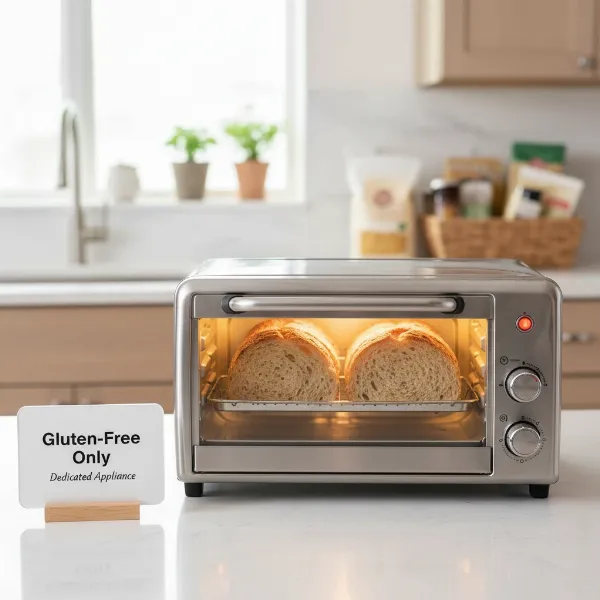 A dedicated toaster oven for gluten-free baking, showing safe practices for preventing cross-contact
Bread Machines
For homemade gluten-free bread, a dedicated bread machine is not just a convenience, but a necessity. The internal components of a bread machine, including the kneading paddle and baking pan, can trap gluten particles that are almost impossible to completely remove through cleaning. Using a separate bread machine ensures that your gluten-free ingredients never come into contact with gluten-containing residues, guaranteeing the purity of your loaves.
Ovens (Standard and Convection)
Sharing a conventional oven for both gluten-free and gluten-containing foods can be managed with proper precautions. When baking simultaneously, always place gluten-free items on the top rack to prevent crumbs or spills from gluten foods falling onto them. Covering gluten-free dishes with foil or an oven-safe lid adds an extra layer of protection.
Convection ovens, with their circulating fan, present a higher risk. The fan can blow airborne gluten particles or dust from previous baking sessions onto gluten-free items. If a dedicated oven isn’t an option, always cover your gluten-free food completely when using a convection oven, even if it’s the only item inside. Some individuals prefer to cook gluten-containing meals in the main oven and use a dedicated air fryer or toaster oven for their gluten-free items to fully avoid this risk.
Air Fryers
Air fryers operate by circulating hot air, similar to a convection oven, making them another high-risk appliance for gluten cross-contact. Wheat dust or food particles from previous gluten-containing meals can easily be blown onto gluten-free food. The safest approach is to have a dedicated air fryer for gluten-free cooking.
If a second air fryer isn’t practical, consider models with two separate drawers, designating one exclusively for gluten-free use and labeling it clearly. Thorough cleaning between uses is essential, along with the use of silicone liners or parchment paper baskets to create a barrier. However, studies on the effectiveness of cleaning shared air fryers are limited, so a dedicated unit remains the most secure option.
Microwaves and Dishwashers
Microwave ovens are generally considered safe for shared use, as long as items are heated separately to prevent direct spills or contact. The risk of airborne gluten transfer is minimal.
Similarly, a functional dishwasher that effectively removes food particles and cleans thoroughly is usually safe for washing both gluten-free and gluten-containing dishes together. The high temperatures and detergents are typically sufficient to eliminate gluten residues.
Beyond Machines: Utensils and Bakeware
While large appliances are a major focus, smaller tools and bakeware also play a critical role in preventing cross-contact.
- Cutting Boards: Wood or porous cutting boards can trap gluten. It’s best to have dedicated cutting boards for gluten-free food, ideally made of non-porous materials like plastic or glass. Many families use color-coded boards (e.g., blue for gluten-free) to easily distinguish them.
- Rolling Pins: Wooden rolling pins are porous and can harbor gluten. Opt for dedicated gluten-free rolling pins made of non-porous materials like silicone or marble, or use a clean, dedicated plastic wrap barrier when rolling.
- Colanders and Strainers: The small holes in colanders and strainers can trap gluten particles. Dedicated gluten-free versions are highly recommended.
- Non-stick Pans and Cast Iron Skillets: Scratched non-stick coatings or the seasoned surface of cast iron can hold gluten. If possible, have dedicated pans for gluten-free cooking.
- Mixing Bowls, Spatulas, and Spoons: While metal, glass, and silicone utensils can be thoroughly cleaned, some prefer dedicated sets, especially in shared kitchens, to remove any doubt. Color-coding can be very helpful here as well.
- Food Storage: Store gluten-free foods in clearly labeled, airtight containers, preferably on a designated high shelf in the pantry or refrigerator to avoid falling crumbs from gluten-containing items.
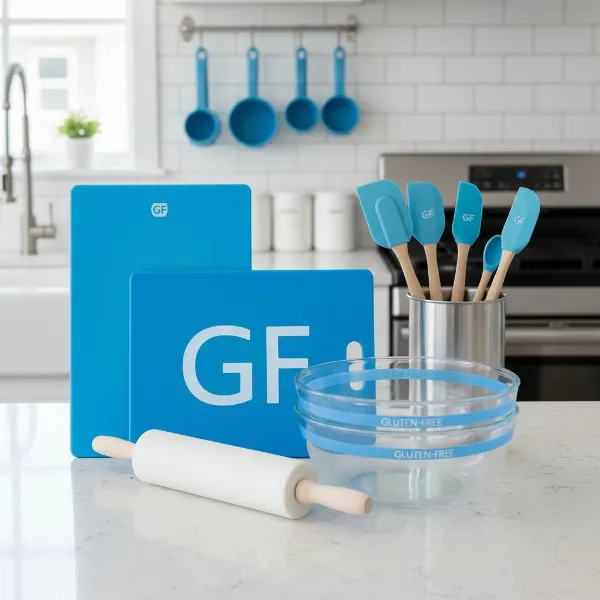 A collection of clearly labeled, dedicated gluten-free kitchen utensils and bakeware for safe preparation
Choosing the Right Gluten-Free Baking Equipment
When deciding on your gluten-free baking setup, consider several factors:
- Budget: Dedicated appliances can be an investment. Prioritize the highest-risk items first (toasters, bread machines, air fryers).
- Kitchen Space: If space is limited, explore smaller, dedicated versions of essential tools or smart sharing strategies with strict protocols.
- Frequency of Gluten-Free Baking: If you bake gluten-free regularly, investing in dedicated core machines will significantly reduce stress and risk.
- Household Needs: In a mixed household, clear communication and dedicated items become even more critical.
Consider purchasing new appliances for gluten-free use if your existing ones have been heavily used with gluten. For items like ovens, where a complete replacement isn’t feasible, focus on rigorous cleaning, covering, and strategic placement.
Tips for Maintaining a Cross-Contact Free Kitchen
Creating and maintaining a gluten-free safe zone requires ongoing effort and clear communication.
- Communicate Clearly: Ensure all household members understand the importance of preventing cross-contact and the specific protocols in place.
- Labeling: Label dedicated gluten-free appliances, utensils, and storage containers clearly.
- Cleaning Protocols: Establish a routine for cleaning shared surfaces and appliances before preparing gluten-free food. Always wash hands thoroughly.
- Dedicated Zone: If possible, designate a specific area in your kitchen as a “gluten-free zone” for preparation and storage.
- Read Labels: Always double-check ingredient labels on all food products, even those you regularly use, as formulations can change.
Conclusion
Navigating gluten-free baking safely in a world of shared kitchens is an achievable goal with the right knowledge and tools. By understanding the risks of cross-contact and investing in appropriate machines—whether dedicated units like bread makers and toasters, or employing careful strategies for shared ovens and air fryers—you can dramatically reduce your exposure to gluten. Prioritizing dedicated items for high-risk appliances and meticulous cleaning for others will empower you to bake and enjoy delicious gluten-free treats with confidence. What is your top tip for maintaining a perfectly cross-contact free gluten-free kitchen?
Frequently Asked Questions
Can I use the same oven for gluten-free and regular baking?
Yes, you can use the same oven, but take precautions. Always place gluten-free items on the top rack and cover them to prevent crumbs or spills from gluten-containing foods. For convection ovens, always cover gluten-free food due to circulating air.
Do I need a separate toaster for gluten-free bread?
It is highly recommended to have a dedicated toaster for gluten-free bread. Traditional toasters are difficult to clean thoroughly, and crumbs can easily transfer gluten. Toaster bags or a dedicated toaster oven are safer alternatives.
How often should I replace my gluten-free specific utensils?
Non-porous gluten-free specific utensils (metal, glass, silicone) can last indefinitely with proper cleaning. Wooden or scratched plastic items might need replacement if you suspect gluten has become embedded, or if they show significant wear.
What is the difference between cross-contact and cross-contamination?
Cross-contact specifically refers to the transfer of allergens, like gluten, from one food to another. Cross-contamination typically refers to the transfer of bacteria or other harmful microorganisms. For those with celiac disease or gluten sensitivity, cross-contact is the primary concern.